

We Salvadorans can do difficult things”: the story of Patricia Ortiz, a Salvadoran woman at NASA
From a very young age, Patricia Ortiz was clear about her dream: to work in space. Today, that girl who grew up in Los Angeles is the only Salvadoran woman leading projects at NASA in Southern California. In an interview with La Prensa Gráfica, Ortiz recounts the effort that took her from a childhood marked by the sacrifice of her migrant mother to becoming a benchmark in aerospace engineering.
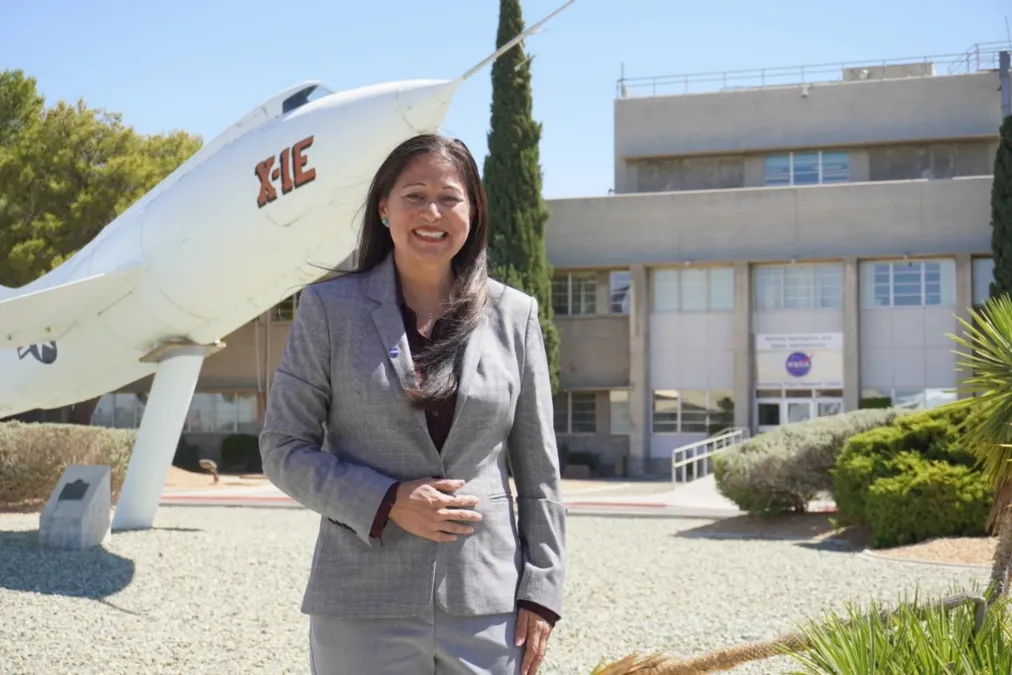
Since the age of seven, Salvadoran Patricia Ortiz dreamed of reaching space; now she works behind the scenes as a space project manager and partnerships lead (acting) at the Armstrong Flight Research Center of the National Aeronautics and Space Administration (NASA).
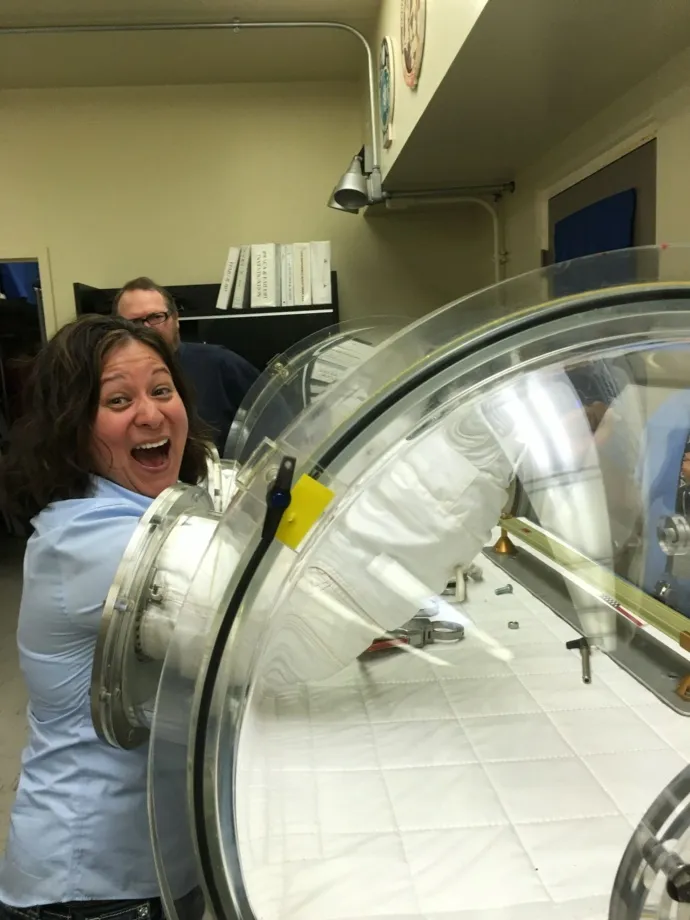
Although her goal was clear, the path was not easy at all; Patricia Ortiz told La Prensa Gráfica about the hard work she put in to become the only Salvadoran and Latin American woman leading NASA projects in Southern California."
Her story begins with her mother, Ana Martínez, a Salvadoran native of Lolotique, San Miguel, who migrated to the United States at the age of 31 in search of a better future. Martínez worked cleaning houses to provide an education for her five children.
"She (Ana Martínez) was the first in our family to leave El Salvador. Then, when she came to Los Angeles, she didn't know anyone and had to manage all on her own”, said Patricia Ortiz.
At seven years old, Patricia dreamed of going to outer space.Her desire was born from watching a 30-minute television program about a journey that astronaut Buzz Aldrin undertook to the Moon; and although her passion for the orbit was born at that moment, the Salvadoran admitted that she did not know how she would manage to be there someday.
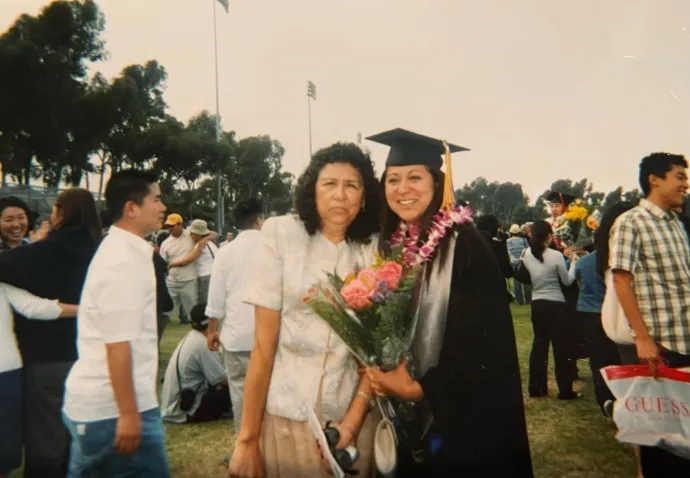
Ortiz pursued her dreams, and at 18 she obtained a scholarship to study aerospace engineering at the University of California, San Diego, and she was the only woman in her class to graduate from that major.
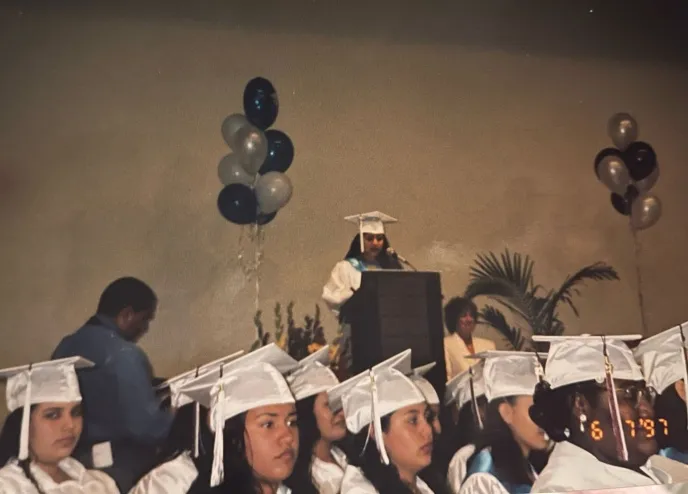
While at the university, Patricia did several volunteer projects with the Society of Hispanic Professional Engineers (SHPE). “That organization helps those who are studying engineering or any career whether it is aerospace, chemical, or any [branch] of engineering, and they helped us reach the goals we had—for instance, to go work at NASA or at big companies,” Ortiz recalled
The aerospace engineer remembers that there was a competition she took part in that opened the doors to NASA. “There was a competition and I was on a company team with a professional named Rubén, I never forget him... right when I was walking at the conference where they were going to do interviews (to apply to NASA), Rubén recognized me and called me over. He was at the Boeing company table and asked me, ‘Are you graduating this year?’ And I told him, ‘yes,’ so he says to me, ‘ah, okay, do you want to do an interview with the company?’ And I said ‘yes,’” Ortiz recalled.
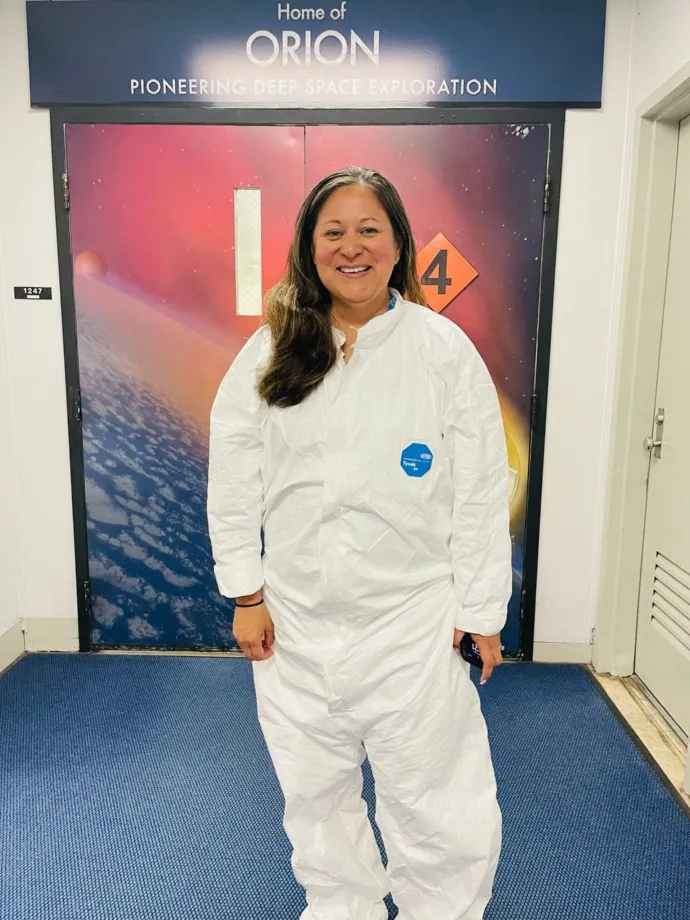
Patricia remembers that three senior engineers interviewed her, and if she passed, she would be employed by the Boeing company and serve as a contractor for NASA. “They told me that the only thing I had to do was graduate in three months. I was super happy at that moment and got really focused on graduating. The job was in Texas and I lived in California, so, as soon as I graduated, I moved to Texas and started working at the Johnson Space Center,” Ortiz recalled.
According to NASA, a contractor can perform a wide variety of roles, from supporting research facilities and core public utility operations to providing ground support services for spaceflight missions and astronaut training. They can also work in areas such as technology development, the acquisition of Earth observation data, and contract management.
Her work at NASA
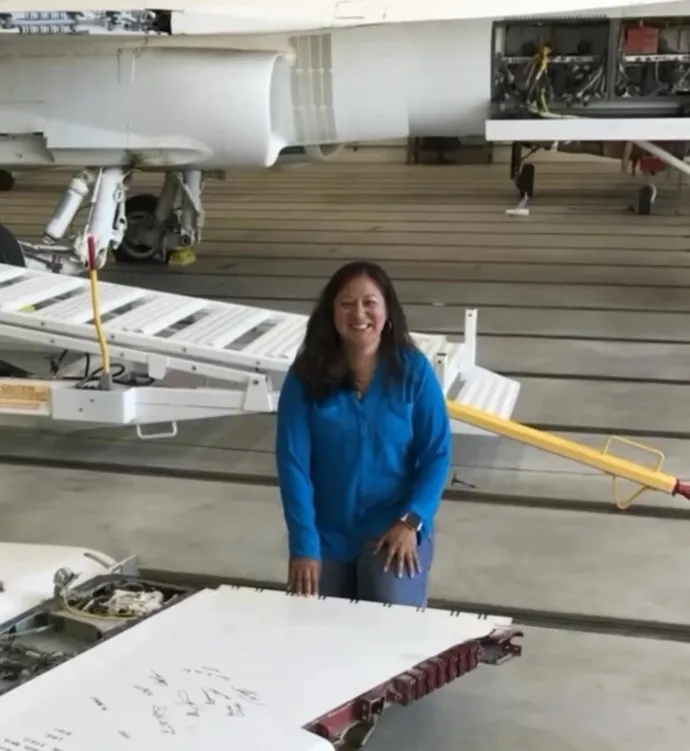
During her first years at NASA, Patricia Ortiz was supporting the technical team for the International Space Station, a job she held for 13 years. In 2016, Patricia began working at NASA's Armstrong Flight Research Center. Since then, she has executed space and aeronautical projects—that is, flight research utilizing high technology to learn more about a planet or space prior to the astronauts' travel.
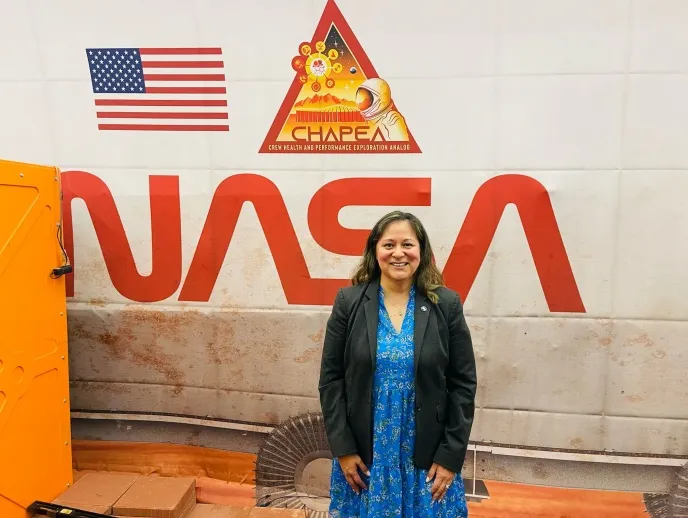
Ortiz also stated that she is the deputy project manager for the Orion heat shield; in this project, a spectrometer installed on Orion will be programmed for the Artemis 2, 3, 4, and 5 missions.
“As a manager, one first has to understand the mission well and plan the timeline to make the mission successful. This timeline also helps the team know how they are going to reach the goal,” Ortiz explained.
The Salvadoran also mentioned that she would like to help with the project to send astronauts to Mars; however, she noted that this project requires a lot of work since it takes between eight to nine months to reach the planet, a year or a year and a half stay, and another eight to nine months to return to Earth. “At a minimum, it is three years that astronauts will have to dedicate from their lives for that mission,” the aerospace engineer added.
Despite fulfilling her dream of being an engineer and working on spacecraft, Patricia still has becoming an astronaut pending on her “to-do list.” “I still haven't given up on that dream of being an astronaut. I initially wanted to work on the technology or the ships that were going to reach space, the Moon, or Mars, and well, after that, there is also the dream of reaching space,” she said.
“I will continue working to demonstrate that we Salvadorans can do difficult things”
Patricia Ortiz is the only Salvadoran and Latina woman to hold the position of Space Project Manager and Partnerships Lead (acting) at NASA's Armstrong Flight Research Center, a title she carries with great pride and one that she hopes more Salvadoran women can access in the near future.
“I carry my position with a lot of pride and love because I can represent Latinas and Salvadoran women, and I will continue working very hard to keep demonstrating to my family, my mother, and to Salvadorans and Latin America that we can do difficult and inspiring things too,” Ortiz mentioned.
Additionally, she said she would like Salvadoran girls to “see that there are people who look like them, who were little girls, who looked just like them, and that they can one day work for NASA, that they can be space engineers and pursue these careers,” she said.
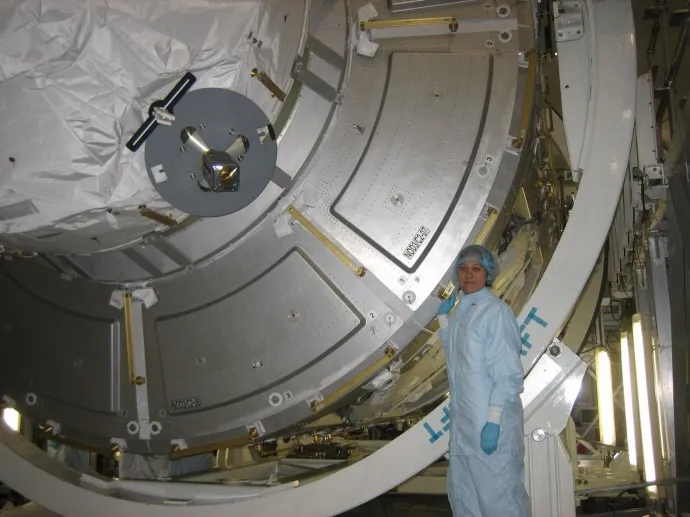
Likewise, she motivated all Salvadoran girls and teenagers to pursue their dreams. “I tell them that nothing is impossible, to keep dreaming big, and the only thing they have to do is set the goal of what they want to do and work hard,”she said. “To be honest, I believe that words have a lot of power, and if they say: 'I am going to be an engineer, I am going to be an astronaut' and they focus on their studies, they will achieve it,” she added.
She urged young people not to be afraid to ask for help “because let me tell you that none of my achievements have been possible without the help of the angels I've had, from the people whom I have asked for advice.”
An engineer, Salvadoran, and mother
Throughout her 21-year career, Patricia Ortiz has been recognized professionally and for her Hispanic heritage; nevertheless, Ortiz also experienced motherhood, a stage in her life that made her change her way of working and even slowed the pace of her career for two years.
“Before I had my child, my focus was to keep advancing my career, and when I had him, well, yes, I took 6 months off from work and took the time to be with the child, and when I returned to work, continuing to advance was no longer my priority. My priority was learning to be a good mom,” she said.
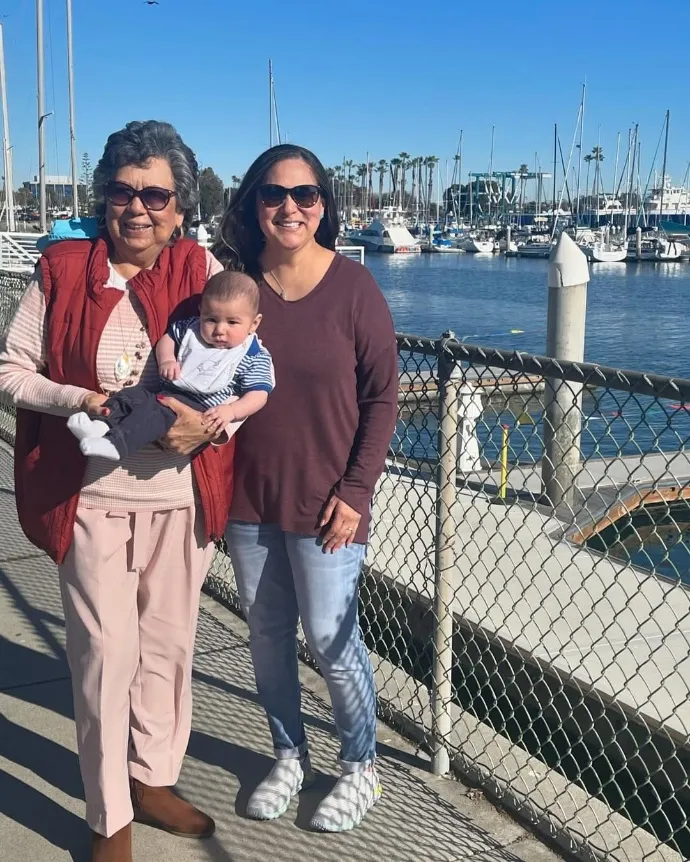
Patricia describes the birth of her son as “a miracle,” which is why during the first two years of his life, Ortiz postponed trips, overtime hours, and practically slowed down her work pace in her career as an aerospace engineer.
“For those 2 years I had to slow down the pace of my career to later keep advancing, and I have had to balance, work hard, and also be a mom,”she emphasized.
In addition to being a mother and an engineer, the Salvadoran also created the Instagram account Latinas need space, where she shares a message of motivation and inspiration through her experience so that women dream big.